


Diving weights: how to calculate the correct amount
What are diving weights and why are they so important?
Diving weights are part of the ballast system that compensates for the natural buoyancy of the body, wetsuit, and equipment. Without adequate weight, the diver tends to float, making descent and depth control more difficult.
The objective of diving ballast It's not about sinking quickly, but about achieving neutral buoyancy during the dive. This helps reduce air consumption, improve stability, and protect the marine environment.
Correct amount of lead weights for diving
There is no single figure that applies to all divers. The amount of diving weights It depends on several personal factors and the equipment used.
Factors that influence the necessary ballast
- Weight and build of the diver
- Type and thickness of wetsuit
- Fresh or salt water
- Bottle type (aluminum or steel)
- Experience and control of breathing
For example, a thick suit requires more diving ballast than a thin one, and in saltwater you usually need more lead weights than in freshwater.
General rule for calculating initial ballast
As a starting point, between 8 and 10 times your body weight in weights is typically used when diving in saltwater with a wetsuit. This figure is only a starting point and should always be adjusted in the water.
At Mola Mola Dive we recommend performing a buoyancy test before the dive to fine-tune the exact amount.
Adjusting the ballast during the dive
A good adjustment of the diving weights It allows you to maintain a horizontal position and precise control. If you find you need to overinflate your buoyancy compensator, you're probably carrying too much weight. Conversely, if you struggle to descend or maintain depth at the end of the dive, you're underweight.
Properly adjusting the ballast improves comfort and reduces physical effort.
Types of ballast systems in diving
Diving weight belt
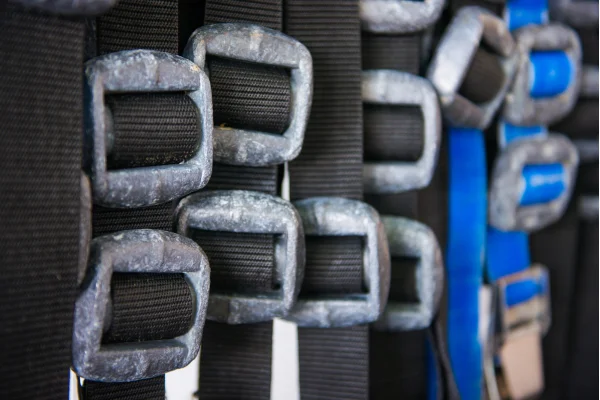
He diving weight belt It is the most traditional and simplest system. It allows for quick weight placement and easy release in case of emergency. It is very common in courses and recreational diving.
It is important to distribute the weight well to avoid discomfort in the back or waist.
Other ways to carry the ballast
In addition to the weight belt, there are integrated pockets in the vest or distributed weight systems. These help improve balance and position underwater, especially during long dives.
Common mistakes when using diving weights
- Using more lead weights than necessary "just in case"“
- Do not adjust the ballast when changing suits or bottles.
- Place all the weight on a single point
- Do not check the ballast before entering the water
Avoiding these errors significantly improves the diving experience and safety.
Mola Mola Dive's tips for diving with proper weights
- Always perform a buoyancy test
- Adjust the ballast according to the environment and the equipment.
- Prioritize balance, not just total weight.
- Consult with instructors if you have any questions.
If you're just starting out, we recommend checking out our diving courses, where we work in detail on buoyancy control. You can also learn more about equipment setup in our section on diving equipment.
Frequently asked questions about diving weights
What happens if I dive with too much ballast?
Diving with excess diving weights It causes increased air consumption, poorer buoyancy control, and greater physical exertion. Furthermore, it increases the risk of damaging the seabed.
Can I change the number of lead weights depending on the suit?
Yes. Each wetsuit change, especially a change in thickness, requires readjusting the weights to maintain proper buoyancy. Even small variations can be noticeable during the dive.