
Learning to dive: a clear guide to getting started safely
The truth is, recreational diving is designed for absolute beginners. You don't need any prior experience or technical knowledge. Training is based on progressive procedures so that anyone can learn safely.
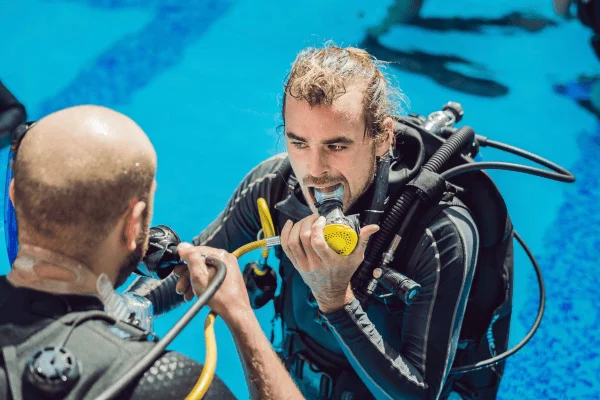
When someone decides to learn to dive properly, they not only learn to use equipment: they learn to move in a different environment, to control their breathing and to react calmly to any situation.
Why learning to dive is easier than you think
The biggest obstacle isn't physical, it's mental. Humans aren't used to breathing underwater, and that inspires a sense of awe. But once you breathe through the regulator for a few minutes, the brain adapts very quickly.
The learning process is divided into small phases: first you understand what you are going to do, then you practice it without pressure, and finally you apply it at sea.
If you've never experienced the sensation, it's best to start with a guided first experience:
Diving baptism at Mola Mola Dive
Basic requirements before your first course
Minimum age and physical condition
You don't need to be an athlete to learn to dive. You just need to be in good general health. The main assessments are of your respiratory system, hearing, and mobility in the water.
The minimum age is usually 10 years and there is no real maximum age if health allows.
Do you need to be a perfect swimmer?
No. You just need to be comfortable in the water. The equipment maintains buoyancy and reduces physical effort, so no swimming technique is required.
Learn to scuba dive step by step
Learning to scuba dive follows a standardized international process that allows diving anywhere in the world.
Part One: Theory
You'll learn how pressure affects the body, how to breathe correctly, and basic safety rules. It's not about memorizing, but about understanding what happens underwater.
Second part: swimming pool or confined waters
Here you will practice fundamental skills:
- recover the regulator
- empty the mask
- control buoyancy
- ascend correctly
- share air
Part Three: Open Sea
The first dives are shallow and unhurried. The goal is to gain confidence by applying what has been learned.
Take a look at all the information about open water course.
Practical tips for making fast progress
Control your breathing
Breathe slowly and deeply. The more relaxed you are, the less air you'll use and the better you'll float.
Equalize your ears properly
Equalize before you feel pressure. If no air enters, ascend slightly and try again without forcing it.
Staying calm underwater
If something makes you uncomfortable, you stop, breathe, and signal. There's always time and never any rush underwater.
Common mistakes when learning to dive
- Moving your arms too much
- Hold your breath
- Going down too fast
- Keep a constant eye on the pressure gauge.
- Not listening to the briefing
Correcting these habits greatly accelerates learning.
After the course: how to continue improving
Certification allows you to practice, but real experience comes after the first 10-15 dives. That's when you improve your buoyancy, air consumption, and confidence.
Diving is a cumulative skill: each dive adds to your safety.
Frequently Asked Questions
Is it safe to learn to scuba dive?
Yes, following the rules and with professional instructors, it is a very controlled activity.
How long does it take to feel comfortable?
Between the second and fourth dive, most students already enjoy it without nerves.
How deep will I be able to go?
After learning to dive, you will normally be able to descend to 18 meters accompanied by another certified diver.
Can I learn to dive if I get nervous?
Yes. Diving helps improve breath control and relaxation.